
A Luxury Flooring Perspective for Homes Across the United States
Across the United States, hardwood and tile remain two of the most enduring flooring choices for high-quality residential design. Both offer beauty, durability, and long-term performance, but they create distinctly different experiences within a home.
For homeowners in Southern California, particularly Newport Beach, Corona del Mar, Crystal Cove, Newport Coast, Balboa Island, and throughout Orange County, the decision can also involve coastal conditions, indoor-outdoor living, architectural style, and lifestyle.
Tile offers exceptional durability and moisture resistance. Hardwood brings natural warmth, depth, and character that can become an integral part of the architecture.
The right choice starts with the home itself.
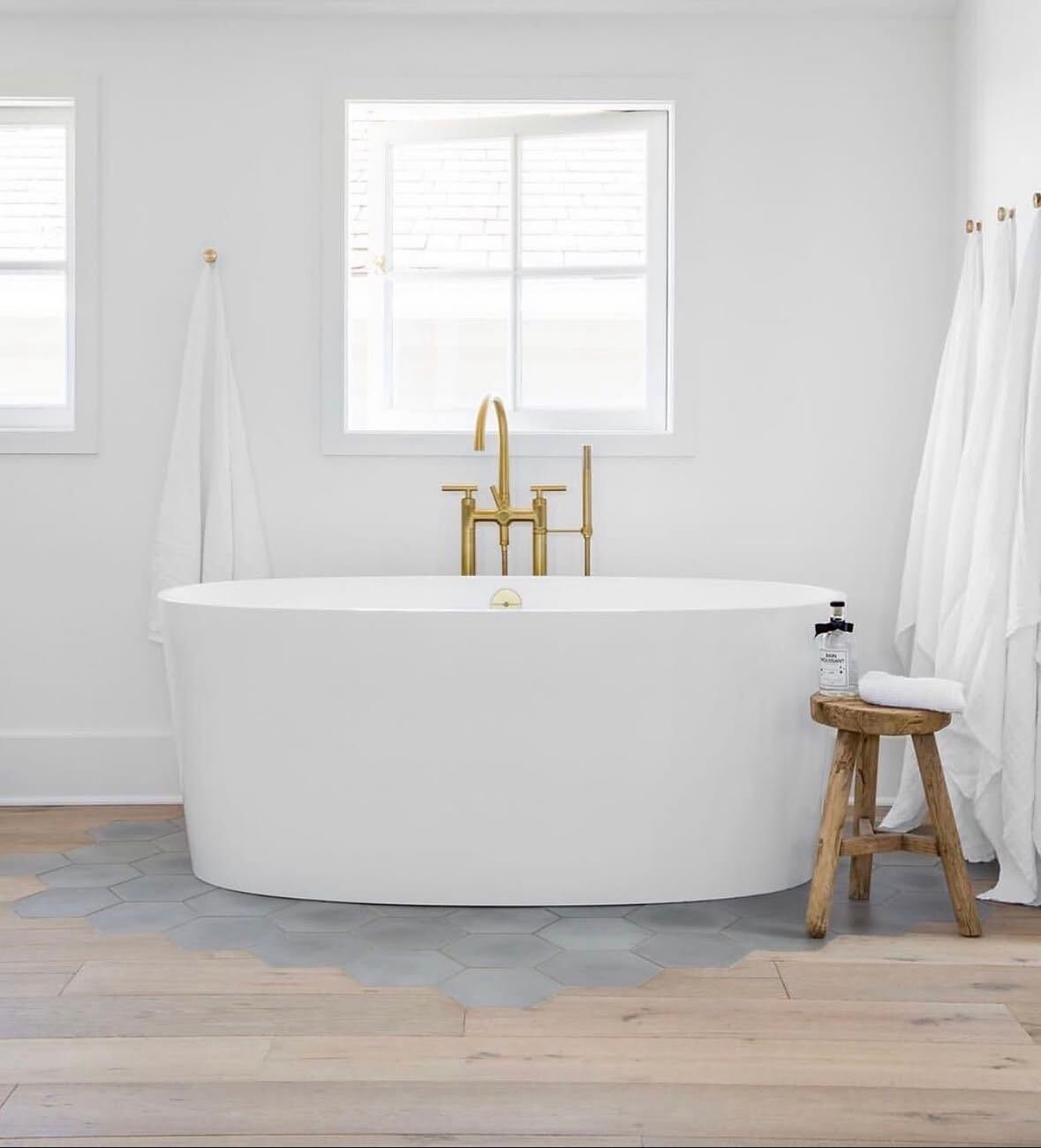
1. Tile Flooring vs. Hardwood Flooring: Start With the Design
When comparing tile flooring vs hardwood flooring, design should come first.
Tile can create a clean, architectural look and works particularly well in bathrooms, laundry rooms, pool areas, and spaces frequently exposed to moisture.
Hardwood creates a warmer experience. Wood flooring is also softer on your bones while walking compared to tile flooring. Natural grain, subtle color variation, and texture give every floor its own character. In homes where stone, plaster, glass, and natural light are prominent, hardwood can soften the architecture while creating continuity from one room to the next.
This is particularly effective in open-concept homes throughout coastal California, where kitchens, dining rooms, and living spaces often flow together.
2. Wood Flooring vs. Porcelain Tile
Modern porcelain is remarkably versatile. It can replicate stone, concrete, and even wood while offering excellent resistance to moisture and everyday wear.
But when considering wood flooring vs porcelain tile, appearance is only part of the decision.
Real hardwood offers natural depth and variation that manufactured wood-look tile cannot fully reproduce. Wide-plank European Oak, for example, can provide a refined foundation without competing with cabinetry, stonework, furnishings, or the surrounding architecture.
For homes in Laguna Beach, Laguna Niguel, San Clemente, Irvine, and Coto de Caza, the best choice is the one that complements both the architecture and the way the home will be lived in.
3. Engineered Hardwood vs. Tile
The engineered hardwood vs tile conversation is especially relevant for Southern California homes.
Premium engineered hardwood features a genuine hardwood surface with a layered construction designed to provide greater dimensional stability than traditional solid wood. This can be particularly valuable for certain coastal environments and homes constructed over concrete slabs.
For residences in Newport Beach, Balboa Island, Solana Beach, and San Diego, engineered hardwood can offer the warmth and authenticity of real wood while providing construction characteristics well suited to many California homes.
Quality matters. A premium engineered floor designed for long-term performance is very different from a mass-produced product selected primarily around price.
4. Hardwood vs. Tile Cost and Longevity
There is no universal answer to hardwood vs tile cost.
Standard porcelain may cost less than custom hardwood, while natural stone, premium porcelain, intricate patterns, and specialized installation can significantly increase the investment.
With hardwood, species, grade, plank width, texture, custom color, finish, patterns, stairs, and installation can all influence the final cost.
So, which flooring lasts longer?
Both can last for decades when properly specified, installed, and maintained. Tile is exceptionally resistant to surface wear, while quality hardwood offers another advantage: many wood floors can be maintained, repaired, and refinished rather than completely replaced.
For luxury residences in Pelican Hill, Los Angeles, Beverly Hills, Brentwood, Pacific Palisades, Bel-Air, and West Hollywood, long-term quality should be considered alongside initial cost.
5. Tile vs. Hardwood Maintenance
When comparing tile vs hardwood maintenance, porcelain is generally more forgiving around water and requires straightforward everyday care.
Hardwood requires slightly more awareness. Sand and grit should be removed regularly, furniture should be properly protected, and standing moisture should be addressed promptly. These considerations are especially important for homes near the coast.
With the appropriate species, construction, and finish, however, premium hardwood can perform beautifully in everyday family life.
The same applies when choosing the best flooring for pets. Tile offers excellent scratch resistance and easy cleaning, while hardwood can also be a practical and beautiful option when the right texture, color, species, and finish are selected.
6. What’s the Best Flooring for Kitchens?
The best flooring for kitchens depends largely on the home’s architecture and lifestyle.
Tile remains an excellent option when maximum moisture resistance is the priority.
However, today’s luxury homes often feature open kitchens connected directly to dining and living spaces. Changing materials at the kitchen can interrupt that visual flow.
Continuing hardwood throughout these spaces can create a more seamless architectural experience. This is one reason engineered European Oak and other premium hardwoods are frequently considered for open-plan California residences.
7. Tile or Hardwood Resale Value?
When considering tile or hardwood resale value, there is no single formula that applies to every property.
Location, architecture, material quality, condition, and craftsmanship all influence how flooring contributes to a home’s appeal and value.
In premium markets throughout Orange County and Southern California, quality is noticeable. A thoughtfully selected hardwood floor can bring warmth and continuity to a residence while complementing cabinetry, millwork, stone, and furnishings.
But simply choosing wood does not create a premium result. Species, grade, plank proportions, color, finish, and installation all matter.
So, What Is the Best Flooring for California Homes?
There isn’t one universal best flooring for California homes.
Tile makes sense where moisture resistance and exceptional surface durability are priorities. Hardwood excels where natural warmth, architectural continuity, customization, and long-term character matter most.
And in many thoughtfully designed homes, the right answer is a combination of both.
From Newport Beach and Orange County to Laguna Beach, San Clemente, Los Angeles, Solana Beach, and San Diego, flooring should feel intentional to the architecture rather than simply follow a trend.
Final Thought
If flooring is treated like a checkbox,
mass-produced hardwood will get the job done.
If flooring is treated like part of the design language of the home,
there’s really only one direction to go.
Custom.
About Warren Christopher
At Warren Christopher, flooring is not approached as a commodity.
From European Oak collections like Provence, Dune, or Espresso to fully custom finishes, every floor is designed to complement the home—not compete with it .
Whether the project is in Orange County, San Diego, or beyond, the goal remains the same:
Create flooring that feels intentional, refined, and built to last.
Ready to transform your home with timeless wood flooring?
📞 Call: 949-645-1406
📍 Visit: 1534 Newport Blvd, Costa Mesa, CA 92627
📍 Visit: 212 S Cedros Ave Ste 102, Solana Beach, CA 92075
✉️ Email: info@wchristopher.com